Education · May 2025 · 8 min read
Why Hair Thinning Is Rising in India — and What You Can Do Today
India is facing a quiet hair loss crisis. Younger Indians are experiencing thinning hair earlier than any previous generation. The causes are not genetic — they are environmental and nutritional.
The Scale of the Problem
According to dermatologists and trichologists across India, the average age at which people first notice visible hair thinning has dropped significantly over the past two decades. What was once considered a problem for people in their 40s and 50s is now regularly seen in people in their mid-20s.
India's specific geography, diet patterns, water quality, and lifestyle factors combine to create conditions that are uniquely harsh on hair health.
Cause 1: Hard Water
India has among the highest concentrations of hard water in the world. Cities like Delhi, Bengaluru, Jaipur, and Hyderabad have TDS (Total Dissolved Solids) levels in water that far exceed WHO guidelines for drinking water — and this is the water Indians wash their hair with every day.
Calcium and magnesium ions in hard water bind to the hair shaft, creating a mineral deposit that:
- Makes hair brittle and prone to breakage
- Blocks follicles, reducing healthy hair growth
- Strips natural oils, causing dryness and increased shedding
- Makes shampoo less effective (it cannot lather properly in hard water)
Over years, this mineral buildup causes cumulative follicle damage that permanently reduces hair density.
Cause 2: Nutritional Deficiencies
India has high rates of iron deficiency (particularly among women), Vitamin D deficiency (despite abundant sunlight — because most Indians cover up outdoors), and zinc deficiency. All three are directly linked to hair thinning:
- Iron: Ferritin (stored iron) is essential for the hair growth cycle. Low ferritin is one of the most common reversible causes of hair loss in Indian women.
- Vitamin D: Vitamin D receptors in hair follicles regulate the growth-to-rest cycle. Deficiency disrupts this cycle and causes diffuse thinning.
- Zinc: Zinc supports the structural integrity of hair proteins. Deficiency causes fragile hair that breaks before it reaches meaningful length.
Cause 3: Air Pollution
India is home to 22 of the world's 30 most polluted cities. Particulate matter (PM2.5), sulphur dioxide, and nitrogen oxide settle on the scalp and hair, causing oxidative stress at the follicle level. Studies have shown that people living in high-pollution urban areas have measurably lower concentrations of the proteins responsible for hair growth.
The scalp's sebum — its natural protective layer — becomes contaminated with pollutants, which are then absorbed into follicles. This is especially pronounced in cities like Delhi during winter months when pollution spikes.
Cause 4: Chronic Stress
The condition known as telogen effluvium — stress-induced hair loss — causes hair follicles to enter a resting phase prematurely, leading to shedding 2–3 months after a stressful event. In a country where work pressure, exam stress, and economic uncertainty are widespread, chronic low-level stress keeps many people in a continuous low-grade telogen effluvium state.
This is not clinical depression — everyday stress from commuting, long working hours, financial pressure, and family obligations is sufficient to trigger measurable hair loss over time.
Cause 5: Hormonal Factors
Androgenetic alopecia (pattern baldness driven by DHT sensitivity) is genetic, but its expression is accelerated by the environmental and nutritional factors above. PCOS — which affects an estimated 1 in 5 Indian women — causes elevated androgens that trigger or worsen hair thinning. Thyroid disorders, which are also prevalent in India, cause diffuse thinning across the entire scalp.
Why Global Products Fail Indian Hair
Most hair care products — including many so-called “hair loss” products — are developed for European or American hair types: straight, fine, and exposed to soft water. Indian hair is typically denser, coarser, wavier, and exposed to significantly harder water. Products designed for Western hair textures do not perform the same way on Indian hair and in many cases cause additional damage through unsuitable chemicals.
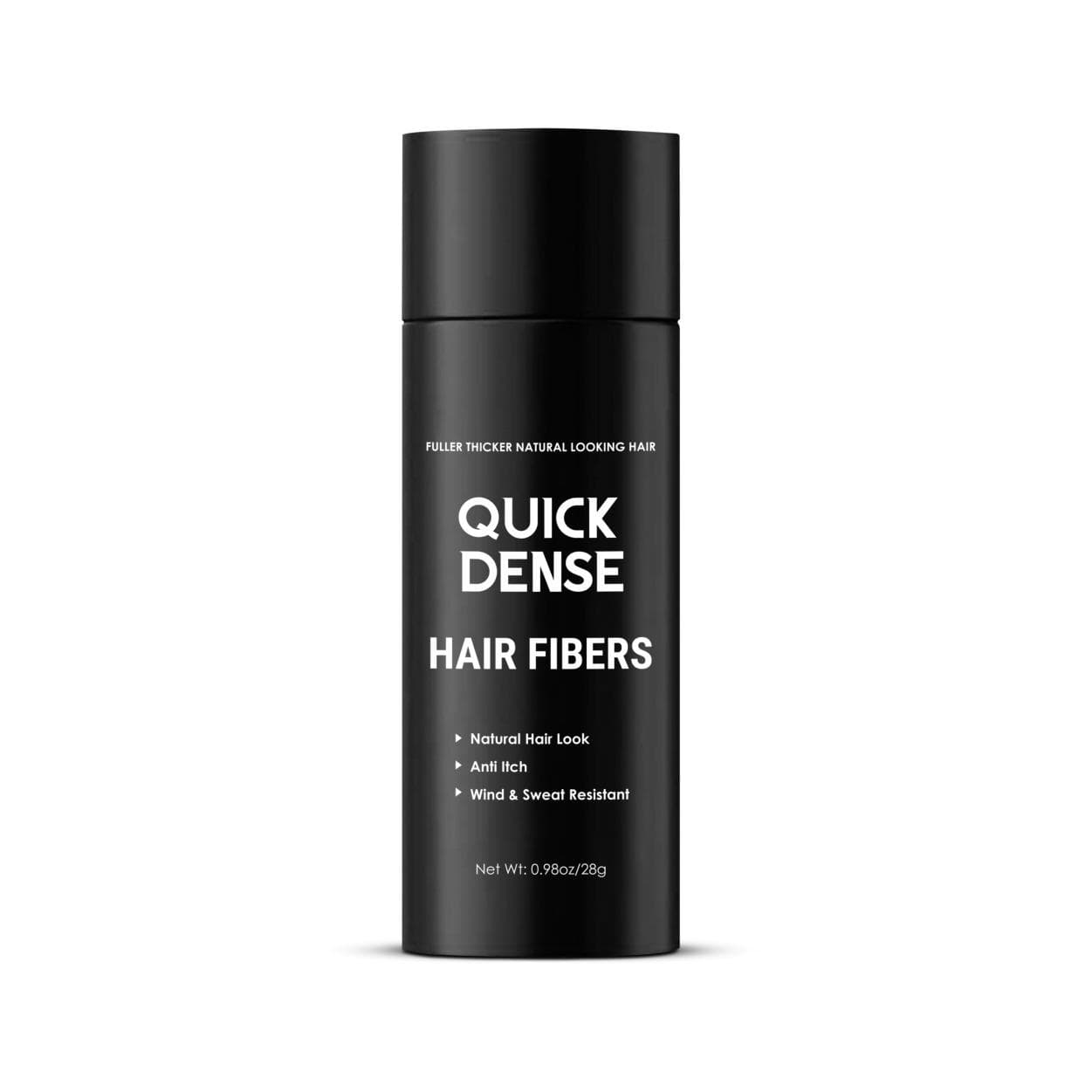
Quick Dense Hair Fibers are formulated specifically for the fiber texture range of Indian hair, ensuring natural-looking coverage without the clumping or artificial appearance common with imported products.
What You Can Do Right Now
The causes above are long-term and systemic — they take time to address. But visible hair thinning does not have to wait for a solution. Here is a two-track approach:
Immediate coverage:
Use Quick Dense Hair Fibers or Scalp Concealer Cream to cover thinning areas today. Both are instant, non-damaging, and wash out. They do not treat the underlying cause but restore your appearance and confidence while you address the root issues.
Long-term intervention:
Get blood work done for iron/ferritin, Vitamin D, zinc, thyroid (TSH, T3, T4), and hormones. Install a shower filter in hard water cities. Manage stress actively. Speak to a trichologist if shedding is severe.
Cover It While You Treat It